Manic Miner
About
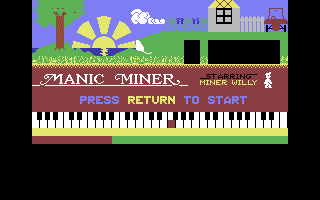
Manic Miner is a single-screen platform game in which Miner Willy discovers an abandoned network of caverns once operated by an advanced civilization. Although its inhabitants disappeared long ago, their automated mining machinery continued working and accumulated a large stockpile of valuable metals and minerals. Willy must pass through 20 caverns to reach the surface with the treasure. Each cavern contains several flashing keys that must be collected before its air supply runs out. Once every key has been obtained, the exit portal begins flashing and can be entered to advance to the next screen. Willy can move left or right and jump, but cannot attack, making success dependent on learning each cavern’s layout and precisely timing his movements. The caverns contain moving guardians that repeatedly follow fixed horizontal or vertical paths, along with poisonous plants, spikes, collapsing floors, conveyor belts, and other stationary hazards. Falling too far, touching an enemy or deadly surface, or exhausting the air supply costs a life and restarts the current cavern with its keys restored. Several screens introduce their own mechanisms, including switches that affect the Kong Beast, Eugene descending toward an exit, falling Skylabs, and a solar beam that rapidly drains the remaining air. Points are awarded for collecting keys and are supplemented by the air remaining when a cavern is completed, encouraging efficient routes rather than merely reaching the exit. Willy begins with three lives and receives another whenever the score passes a multiple of 10,000. Completing the final cavern returns the player to the beginning without increasing the difficulty, allowing the game to continue for a higher score. The title screen uses an arrangement of “The Blue Danube,” while “In the Hall of the Mountain King” plays throughout the caverns. The ZX Spectrum release is the original version. The Dragon 32/64 version uses monochrome graphics to preserve the original screen resolution. The Amiga release includes both an 8-bit-style conversion and an enhanced edition with larger, redrawn graphics and scrolling versions of the same caverns. The Game Boy Advance version offers an original mode recreating the Spectrum levels and an enhanced mode with updated graphics, enemies, and ten additional stages. The iPhone, iPad, bada, and Windows Phone releases reproduce the ZX Spectrum version with platform-specific controls and display options; the iOS edition was also titled Manic Miner: ZX Spectrum HD. Manic Miner was directly inspired by Miner 2049er, sharing its mining theme, self-contained platform screens, patrolling enemies, and timed objectives. It replaces that game’s requirement to cover every section of platform with the collection of keys, a single exit portal, more rigidly choreographed jumping challenges, and a surreal assortment of creatures and machinery. It is therefore a substantial variation on Miner 2049er rather than a literal clone. The game began the Miner Willy series and was followed directly by Jet Set Willy, which expanded the formula into a large interconnected mansion without separate air limits for each room. It also inspired similarly structured games such as Blagger and generated numerous unofficial sequels, modified level sets, ports, and remakes based on the Manic Miner and Jet Set Willy engines.
Description and score courtesy of MobyGames ↗